7 min readResearch
Reviving Poveglia: How an Abandoned Plague Island Becomes a Living Campus
An abandoned, plague-scarred island in the Venetian lagoon, empty since 1968 — and a repeatable method for bringing a dead place back to life without erasing what made it matter.
Revive: to become active or flourishing again.
The island nobody knew what to do with
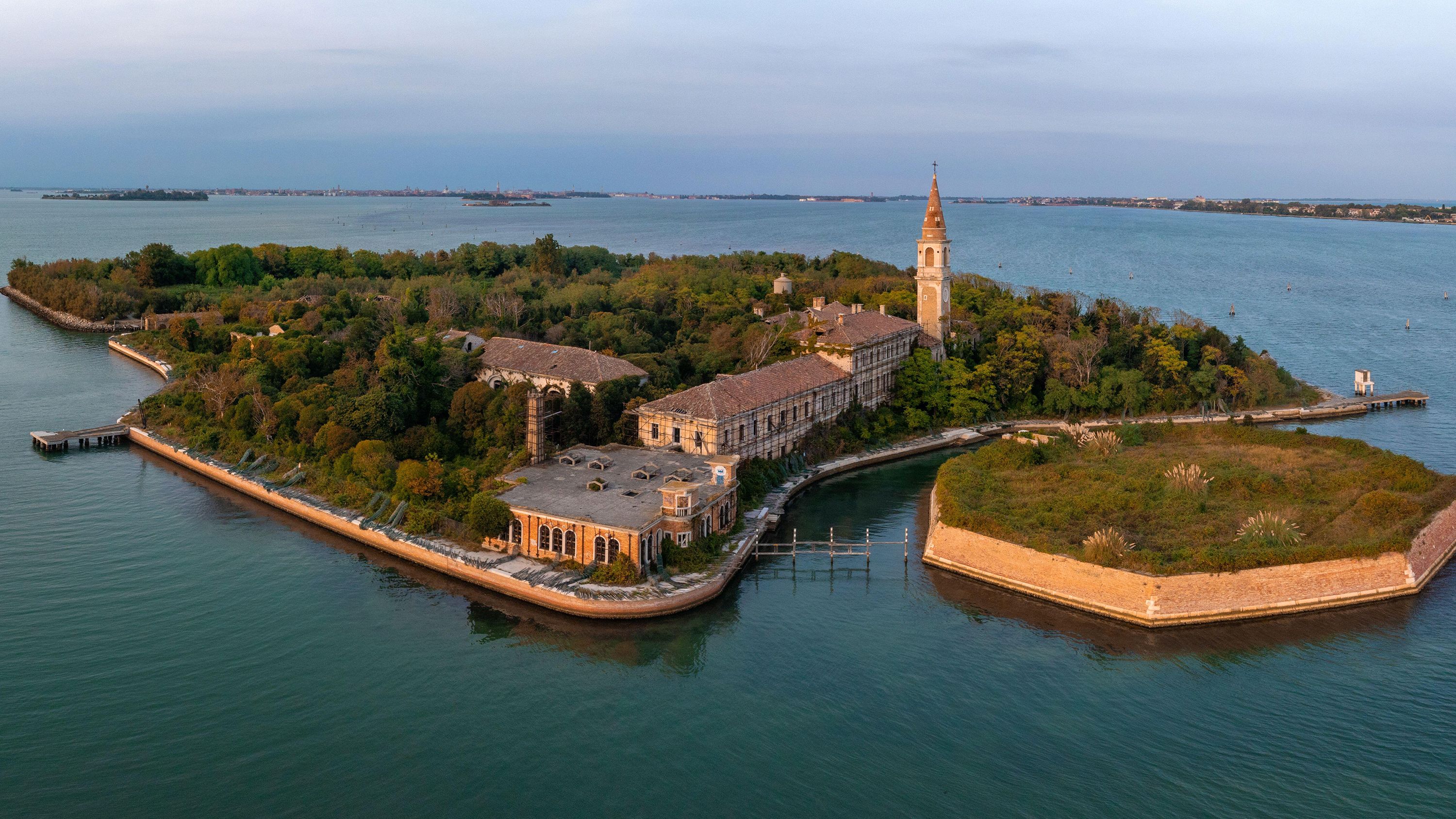
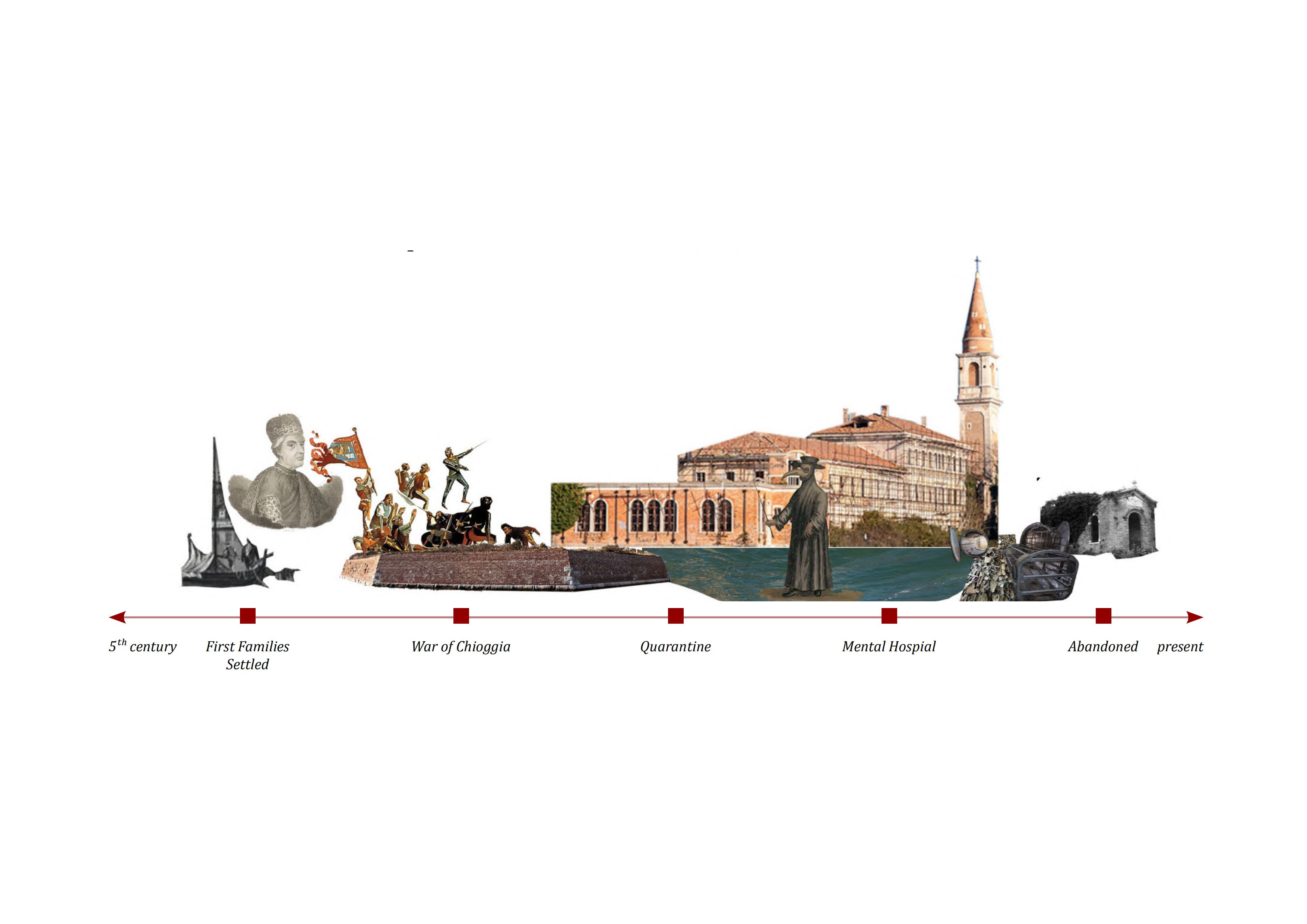
In the Venetian lagoon, a twenty-minute boat ride from Piazza San Marco, sits an island that almost no one is allowed to visit. Poveglia is roughly seven hectares of overgrown ground, crumbling walls and a leaning brick tower. For most of its life it was a place things were sent away to: refugees in the fifth century, plague victims in the fourteenth, a quarantine station for the ships of the Republic, and finally, from 1922, an asylum. In 1968 the last institution closed and the island was simply left. It has been empty ever since.
In 2014 the Italian state tried to auction a 99-year lease; the sale collapsed. In 2016 a competition imagined it as a university campus. Nothing was built. Poveglia became famous instead as “the world’s most haunted island” — a curiosity for ghost-hunting listicles, and a symbol of a question every city now faces: what do you do with a place that has outlived every purpose it was
ever given?
Our answer, developed as the master thesis at Politecnico di Milano, is a method — and the method is the point. Poveglia is extreme, but the moves that revive it are the same ones we would use on a disused factory, a stranded riverfront, or an empty city block.
Why abandoned places are suddenly everyone’s problem
Poveglia is not an oddity; it is a preview. Across Italy there are roughly 6,000 abandoned historic villages, and the government has committed around €1 billion to bring them back to life; one province now offers grants of up to €100,000 to anyone who will restore and inhabit a ruin (idealista, 2025). The reason is demographic: places empty out faster than anyone can fill them.
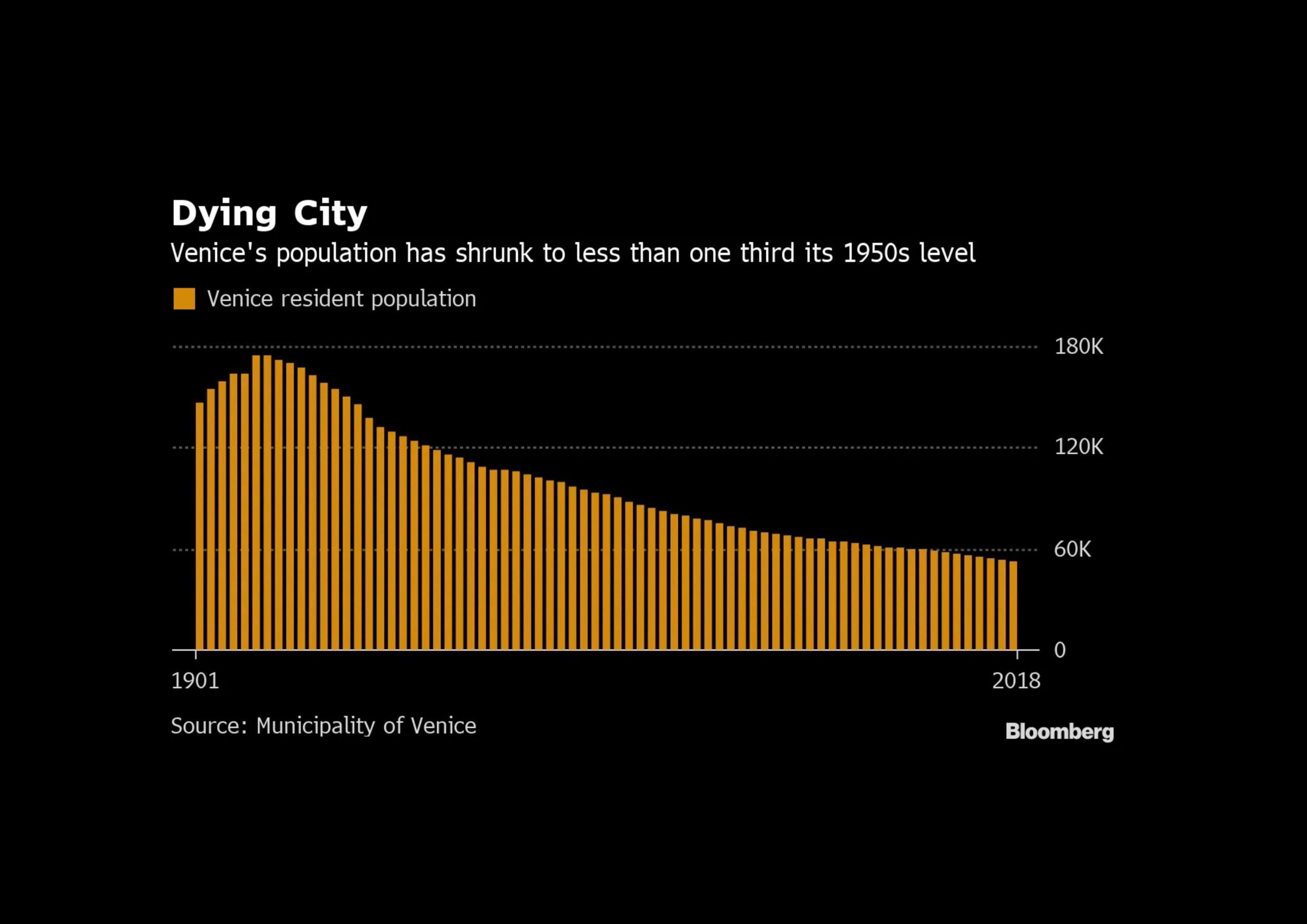
Venice itself is the cautionary tale. Its historic centre has fallen to about 48,000 residents — a 72% collapse since 1952 — while some 30 million tourists arrive each year, nine in ten of them day-trippers, and roughly a third of the city’s homes now sit empty or let to visitors (CNN, 2025). The historian Salvatore
Settis, whose If Venice Dies is one of the spines of our thesis, put the stakes plainly: strip a city of its community and you are left with “a carcass, a funereal scene.” Poveglia’s fate, we argue, is a mirror of Venice’s — and Venice’s is a mirror of a hundred other cities losing their centres to monoculture.
Reviving the abandoned, in other words, has stopped being a niche heritage concern. It is fast becoming the main event.
The two wrong answers: museum or bulldozer
Faced with a ruin, the profession usually reaches for one of two reflexes. The first is to embalm it — fence it off, restore it to a single frozen moment, and turn it into a museum of itself. The second is to clear it — treat the existing fabric as an obstacle and start from a clean slate. Venice’s own €3-billion-plus neighbour on the mainland, and the tabula-rasa riverfront schemes of many post-industrial cities, show where the second reflex leads.
Both answers throw away the same thing: the accumulated intelligence of the place. A ruin is not a blank; it is a set of instructions written by everyone who used the site before you.
Our approach: read the ruin as scaffolding
The Revival begins by refusing both reflexes. Instead of asking what should we build here, we ask what is already here, and what can it carry?
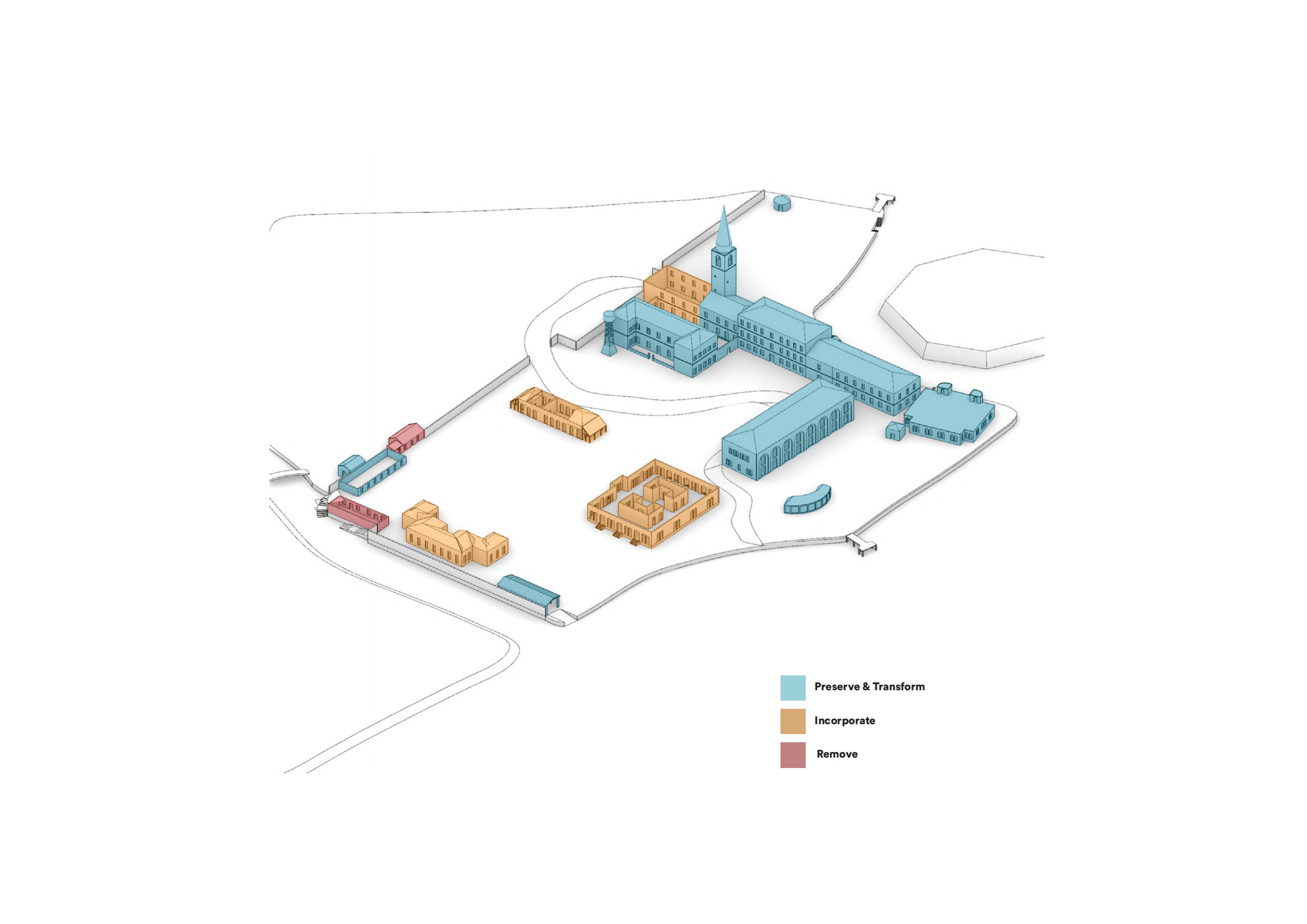
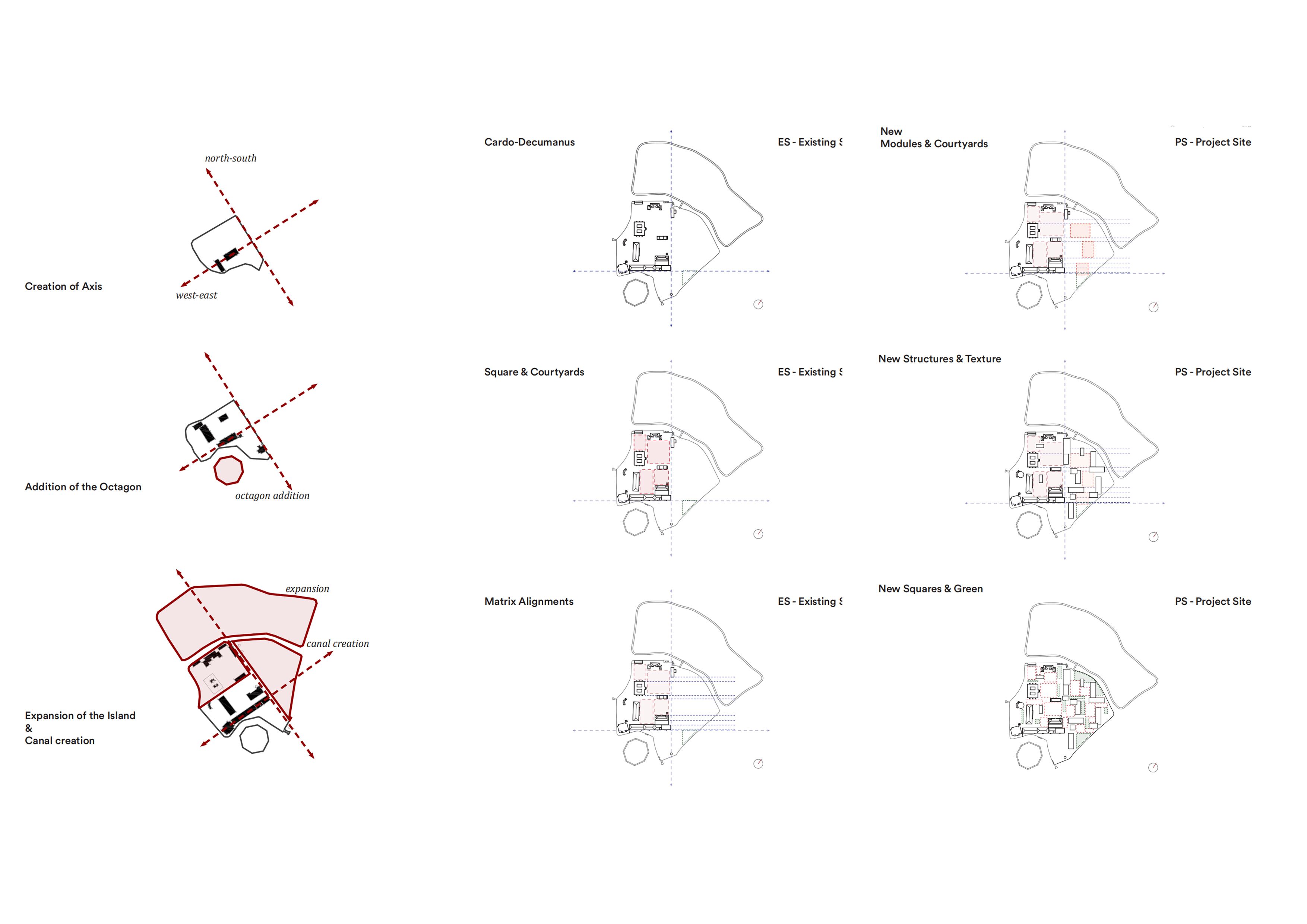
Every one of Poveglia’s structures was sorted into one of three actions — a test we now run on any site:
- Preserve & Transform — sound and identity-defining (the residences, the octagon, the boat house, the church). Kept and re-inhabited.
- Incorporate — too far gone to stand alone, too meaningful to erase. Stabilized and built into the new architecture, so the seam between old and new stays legible.
- Remove — only what carries neither life nor meaning.
What survives becomes scaffolding: existing structures treated as armatures onto which new program is hung. We recovered the island’s own buried logic — two perpendicular historical axes, a cardo and decumanus laid down across centuries — and used them to organize everything new. The result is a genuine palimpsest: the island is revived not despite its history but by means of it.
We keep what can work, not what merely looks old. The existing earns its place in the new by carrying a living function — not by being spared one.
Jane Jacobs, at the scale of an island
A revived place has to actually live, and monofunction kills. Half a century ago Jane Jacobs set out four conditions for a district to thrive (The Death and Life of Great American Cities, 1961): a mix of primary uses, short blocks, a fine grain of old and new buildings, and enough people. They are the backbone of today’s “15-minute city,” and they work at the scale of an island as well as a neighbourhood.
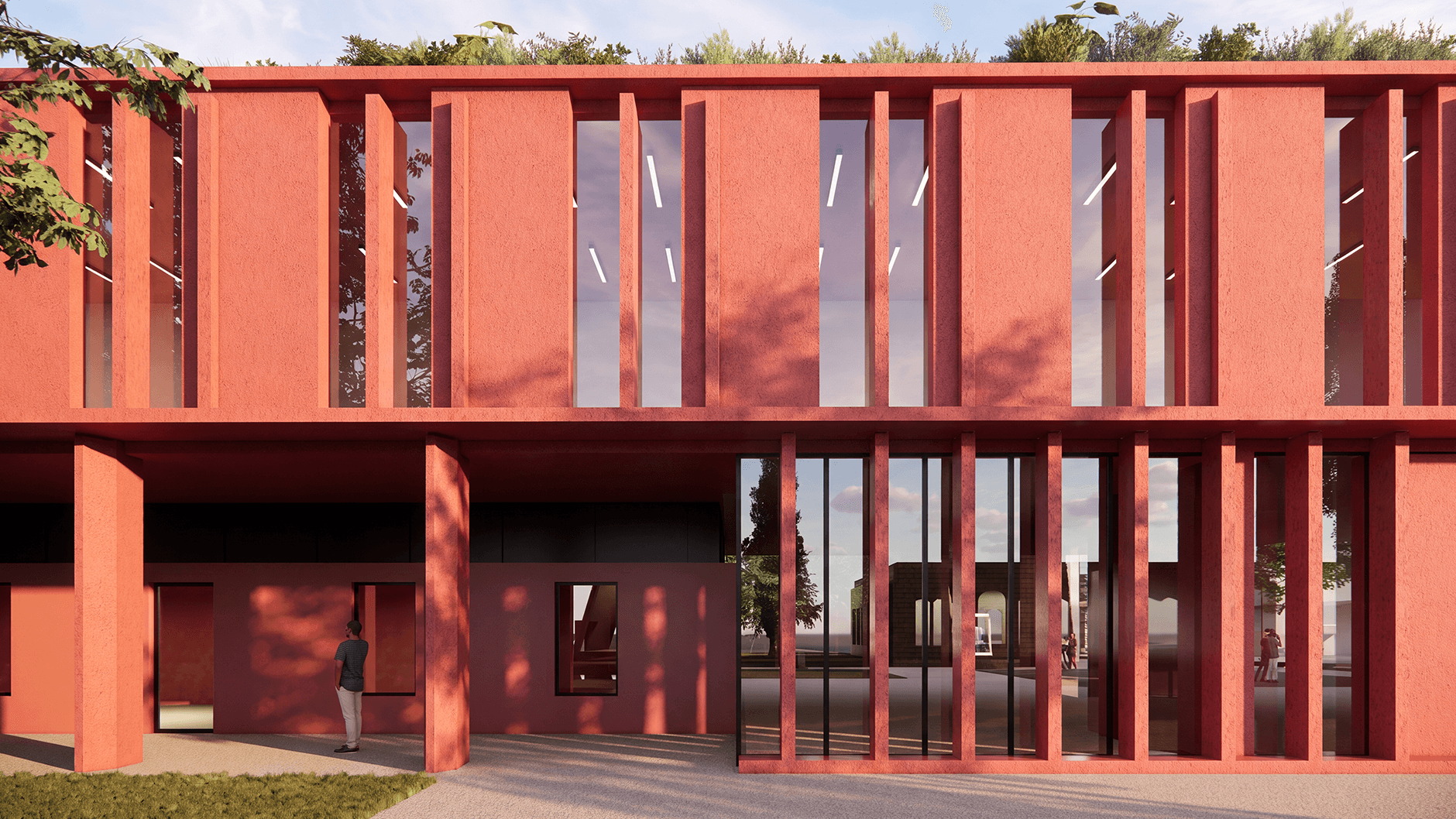
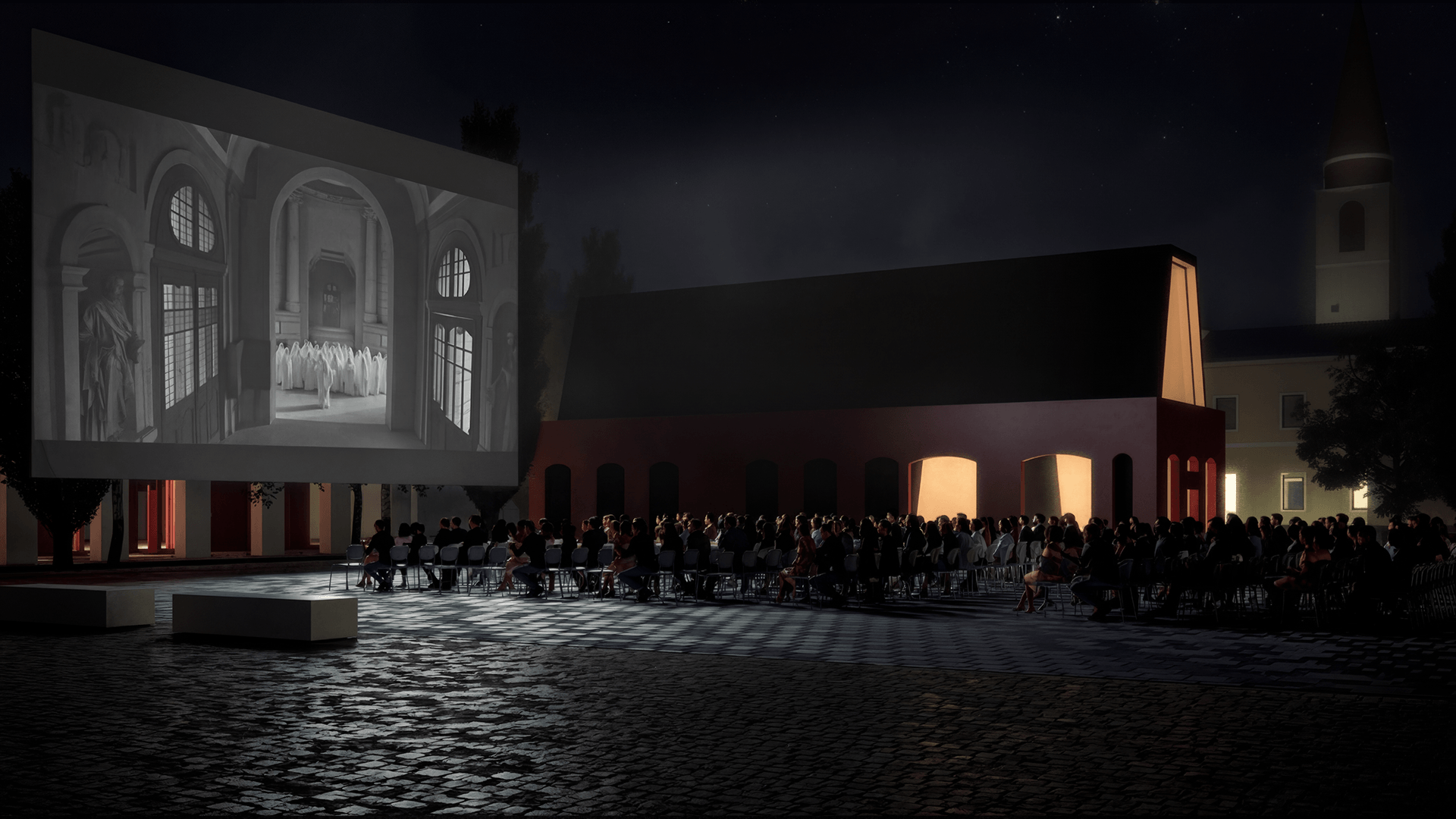
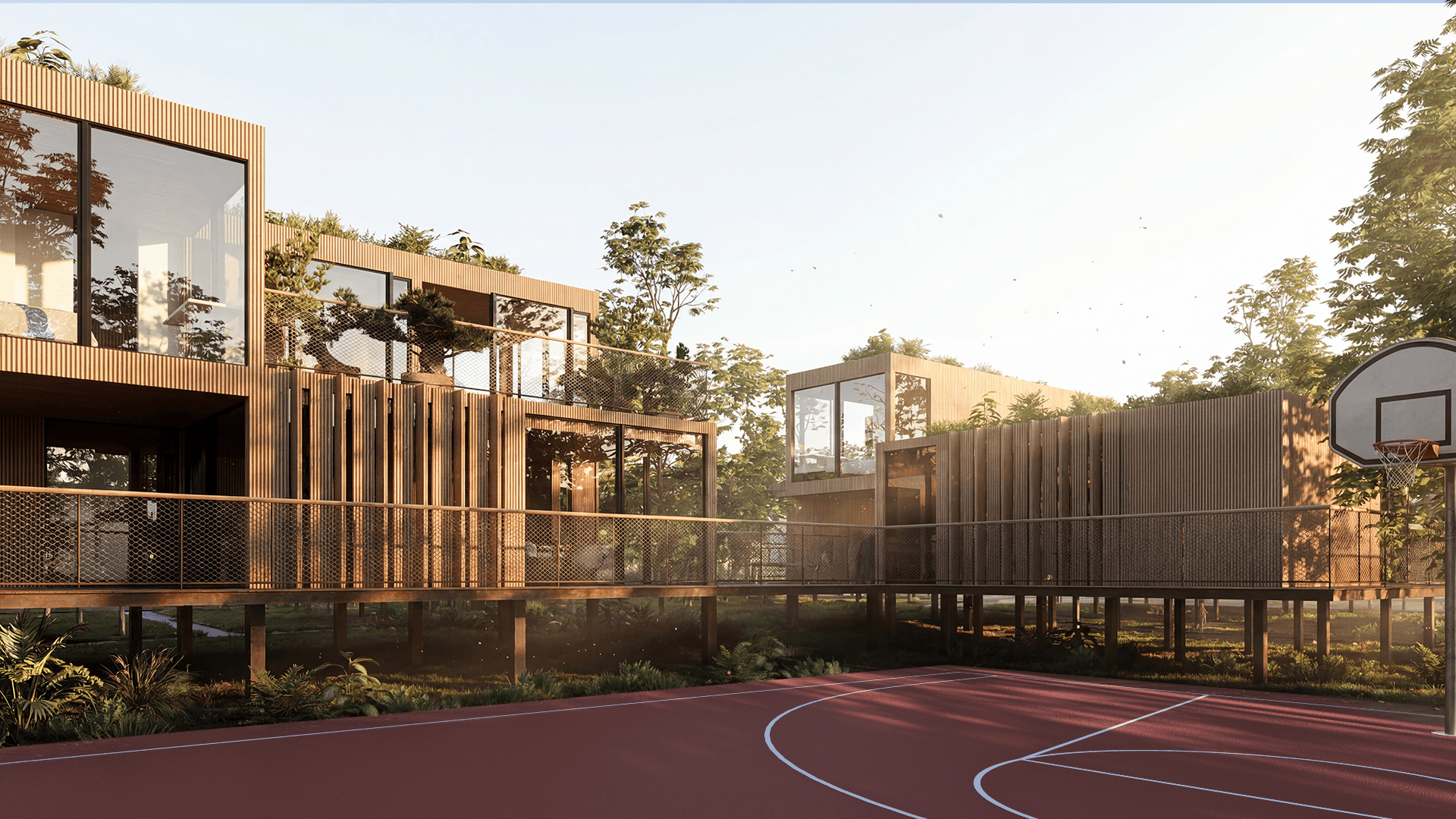
So Poveglia is not zoned into a campus here and housing there. Its ground floor is deliberately mixed — classrooms interwoven with cafés, workshops, exhibition rooms and shops — so that at any hour something is open and someone is about. Density itself becomes a design tool: buildings pull tight to make sheltered squares, then loosen to let the lagoon and the trees back in.
Designing for people, not day-trippers
If Venice teaches one lesson, it is that a place kept alive only by visitors is not alive at all. So the campus is built around community first. Between the private spaces — a student’s room — and the fully public quays, we designed the in-between: the “neutral grounds,” in Ray Oldenburg’s phrase, where a place’s social life actually happens. Oldenburg called them third places; they are the cafés, stairs, colonnades and squares that belong to no one and everyone (The Great Good Place, 1989).
The programme mixes three clocks — students who stay, visitors who pass through, and the events (screenings, exhibitions, the Film Festival next door) that pull the wider public in. That mix is what makes the island self-sufficient rather than a seasonal set. As Yona Friedman warned, an uninhabited city, however new, is only a ruin; it is the inhabitant who invents the place. What Poveglia teaches any site
What Poveglia teaches any site
The island is hard case chosen on purpose: if the method holds here, it holds anywhere. Stripped of the lagoon, the transferable moves are simple to name and demanding to apply:
- Start with subtraction, then addition — inventory what exists before drawing anything new.
- Sort every structure three ways — preserve, incorporate, remove — and keep the seam visible.
- Recover the site’s own order — its axes, grain and orientation — and build with it.
- Mix uses so the place is never empty, and design the in-between spaces where community forms.
- Design for residents, not just visitors — the test of a revival is whether anyone stays.
That is what “revival” means to us: not restoring a place to its past, and not clearing it for a future that ignores it, but adding the next honest layer — so an island the world had written off becomes, again, somewhere to live.
References
- Ninković, K. (2023). The Revival: Poveglia’s Identity as Self-Sustaining University Campus.
- Jacobs, J. (1961). The Death and Life of Great American Cities.
- Oldenburg, R. (1989). The Great Good Place.
- Ungers, O. M. & Koolhaas, R. (1977/2013). The City in the City — Berlin: A Green Archipelago.
- Settis, S. (2016). If Venice Dies.
- Alexander, C. (1977). A Pattern Language
- Venice depopulation & overtourism: CNN, “Battle for the soul of Venice” (2025).
- Italy’s abandoned villages & regeneration grants: idealista (2025).
- Concepts: adaptive reuse, palimpsest, city as archipelago, urban diversity, jacobs, third place, the existing as resource
Related projects
We'd like to hear from you
Contact →