Third Places: The 'Somewhere Else' a Neighbourhood Needs
Not home, not work: the café, the stair, the square where a neighborhood actually happens. Why "third places" went from a sociology term to a public health strategy, and what that means for how we design.
“The devil’s workshop is as likely to be found in a lifeless neighbourhood as in idle hands.”
— Ray Oldenburg
"The devil's workshop is as likely to be found in a lifeless neighbourhood as in idle hands." — Ray Oldenburg
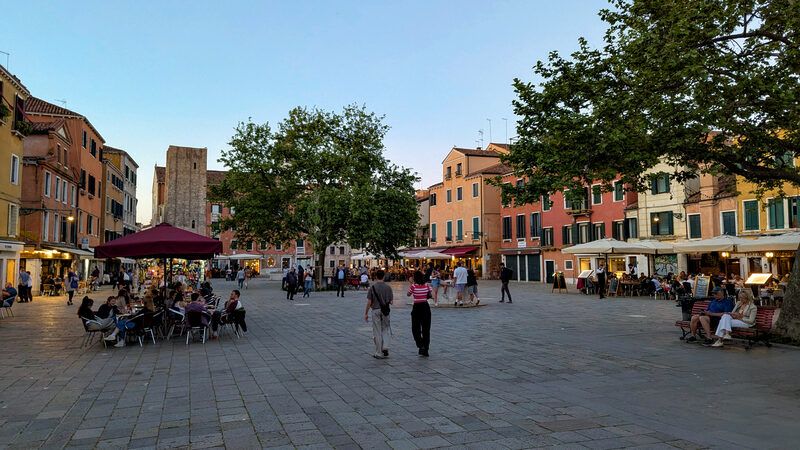
Most of us move between two places without giving it much thought. Home first, work second. Both matter, but neither one adds up to a community on its own. That happens somewhere else, a third place that belongs to neither the private sphere nor the productive one. The café where they know your order without asking. The library reading room. The barber's chair. A square with enough benches to actually sit down. A stair where people stop for a minute instead of walking straight past.
The sociologist Ray Oldenburg named these places in 1989, in a book called The Great Good Place, and their slow disappearance has turned out to be the quiet crisis sitting underneath a few louder ones. We keep coming back to that book in our own work. This is the short version of why it still matters, and what a design practice can actually do about it.
What Makes a Place a Third Place
Oldenburg was specific about the qualities, which is useful, because it means most of them trace back to a decision someone made, or didn't make.
A third place has to be neutral ground: nobody is hosting and nobody is a guest, and you can come and go without owing anyone anything. It levels people out, since status gets left at the door and you end up next to people you'd never otherwise run into. Conversation is basically the point of being there, so the space has to let people linger and actually hear one another over it. It needs to be close by and easy to slip into, nothing effortful about arriving. It needs regulars, the handful of familiar faces who give a place its temperature, and enough lack of polish that people can relax rather than perform. And under all of that there's a mood to it: playful, a little worn in, a home away from home.
Notice how much of that is really about design and not about people at all. Whether a place is easy to drop into. Whether conversation is even physically possible there. Whether it feels precious or lets its guard down. None of it happens by accident.
Where They Went
Third places didn't vanish overnight so much as get worn down over decades, from a few directions at once. Car-dependent sprawl put distance between everything that used to be close. Public space got replaced, bit by bit, by space you can only enter if you're spending money. And more recently, screens and remote work have pulled a lot of social life indoors and onto a screen, out of the neighbourhood entirely. Some people call the result a "doom loop": the more life retreats into the home and the phone, the less gets invested in the places that used to hold everyone together, and the emptier those places get, which only pushes the retreat further (CNU, 2025).
Why It Matters Right Now
What used to be mostly a sociologist's concern is now showing up in public health data. Face-to-face social time has dropped off sharply, loneliness gets called an epidemic often enough that the word barely registers anymore, and something like half of adults, depending on the survey, say they feel lonely on a regular basis. In 2025 the WHO published its first global framework on social connection, treating everyday gathering places, what it calls social infrastructure, as a matter of public health rather than a nice-to-have (PPS, 2025).
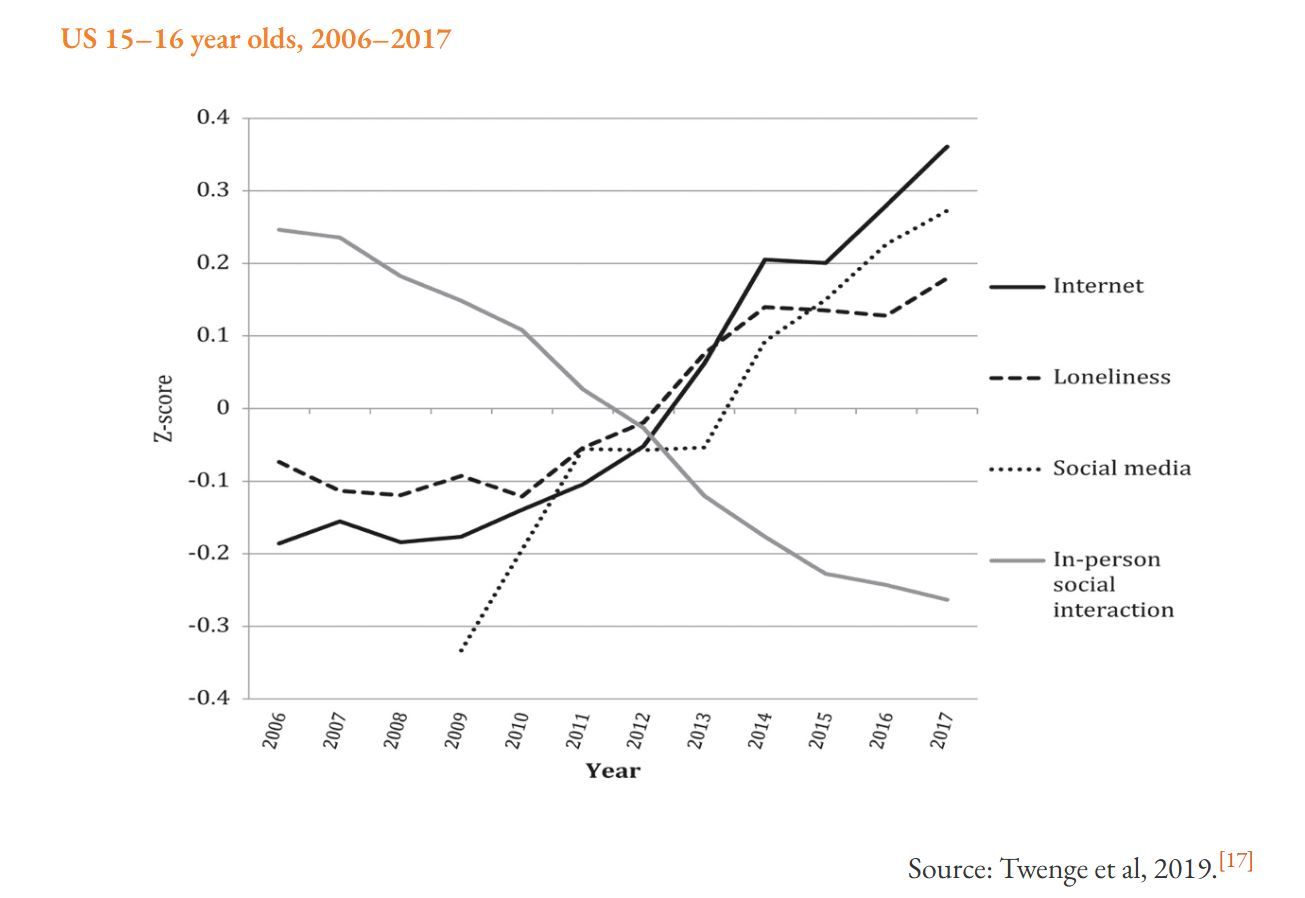
Put plainly, designing a good third place isn't decoration anymore. It's closer to preventive medicine.
Treat the Street Like Part of the Building
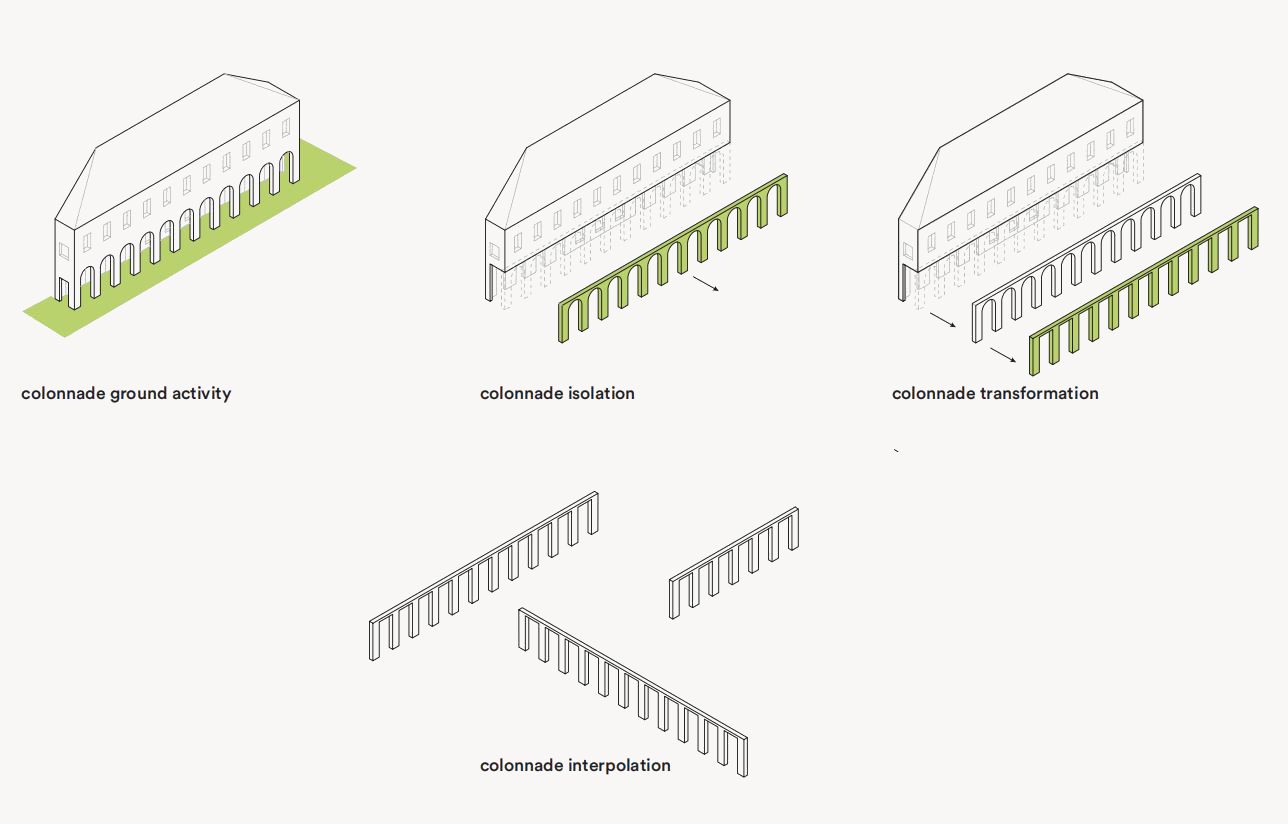
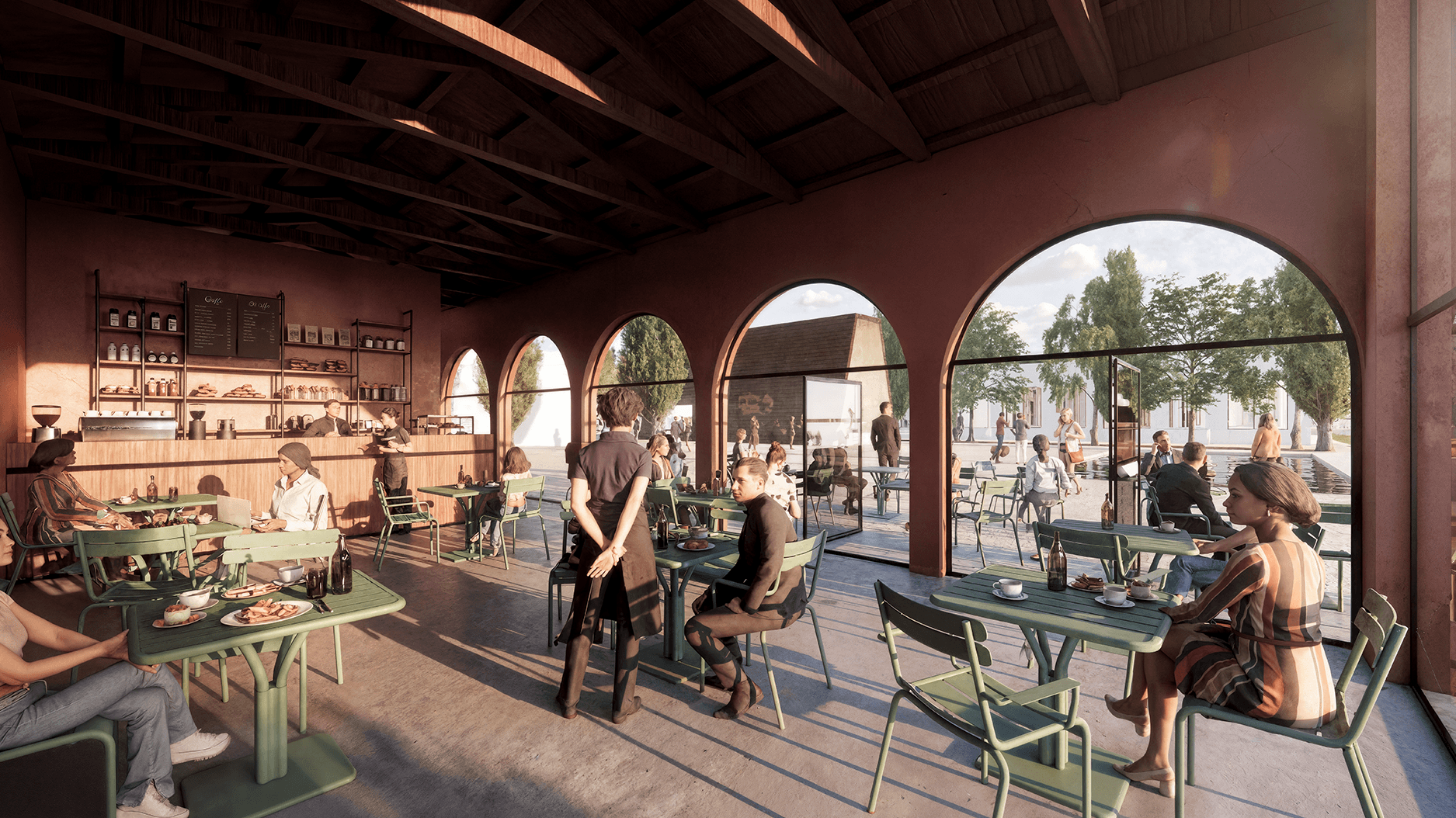
This next part is the idea we actually build into projects. The line between inside and outside should be soft, not hard. When a building's ground floor and the street in front of it are designed as one continuous thing, a café spilling onto the pavement, a colonnade you can duck under, a stoop wide enough to sit on for no particular reason, then the street itself starts to behave like a third place. Oldenburg called this "an extension of home," somewhere people of every age can range freely. That's more or less the whole logic behind how we treat ground floors.
The catch is that a third place can never feel like it belongs to somebody else. The moment you feel like you're intruding, however hospitable the person running the place might be, the whole thing stops working. So a good deal of the actual architecture is about hiding the threshold: softening edges, dissolving the sense that there's a line you need permission to cross.
You Can't Design People Into Talking to Each Other
What you can design is the stage. Third places aren't fully designable, since you can't make people gather, but you can build a setting that invites it, or one that quietly forbids it.
In practice that comes down to a handful of things. The space shouldn't read as owned by one use or one person. There need to be edges worth occupying, somewhere to perch, somewhere to shelter, right at the seam between inside and out. The fit has to stay loose enough that people can use it in ways nobody planned for, at hours nobody scheduled. There should be something to do and something to watch, some small bit of activity that gives people a reason to stay longer than they meant to. And it needs to be sheltered enough to be comfortable without ever feeling closed off.
Past that, the job is mostly finished. Yona Friedman used to say an architect only ever builds an accumulation of objects, and it's the person living there who actually invents the place. Ours is just to make that invention easy.
What This Looks Like on an Actual Project
At Poveglia, the whole revival of the island rests on this. Between the private student rooms and the fully public quay, we built what we've come to call the neutral ground: colonnades, small squares, shaded pockets, a ground floor that widens and narrows as it moves around the site. That's where the island's social life is meant to collect ([[perspective-r1-reviving-poveglia|see the case study]]). A campus lives or dies on the same question as a housing block or a high street: does it give people a decent reason, and a comfortable place, to be somewhere that isn't home and isn't work.
Get enough of that right, and you're not just designing buildings. You're building the places a community actually needs in order to exist.
Reference
- Oldenburg, R. (1989). The Great Good Place.
- Ninković, K. (2023). The Revival: Poveglia’s Identity as Self-Sustaining University Campus.
- WHO 2025 social-connection framework; social infrastructure as health: PPS, State of Public Space 2025.
- Loneliness & the decline of third places: CNU, “Fighting loneliness with parks and third places” (2025).
- Concepts: third place, urban diversity, jane jacobs, the existing as resource.